

A supply chain professional messaged me convinced the Saudi job market was smaller than it looked.
He had a LinkedIn Premium account. He tracked job boards daily. He had alerts set for every relevant title in his field. And based on everything he could see, there simply weren’t that many roles.
He wasn’t wrong about what he could see. He was wrong about what existed.
Most of the Saudi job market is not visible to someone searching from outside it.
Not hidden deliberately. Not a conspiracy. Just structured in a way that most job seekers never have explained to them — because the people who understand it are usually already inside it, and have no reason to explain it to anyone still searching from the outside.
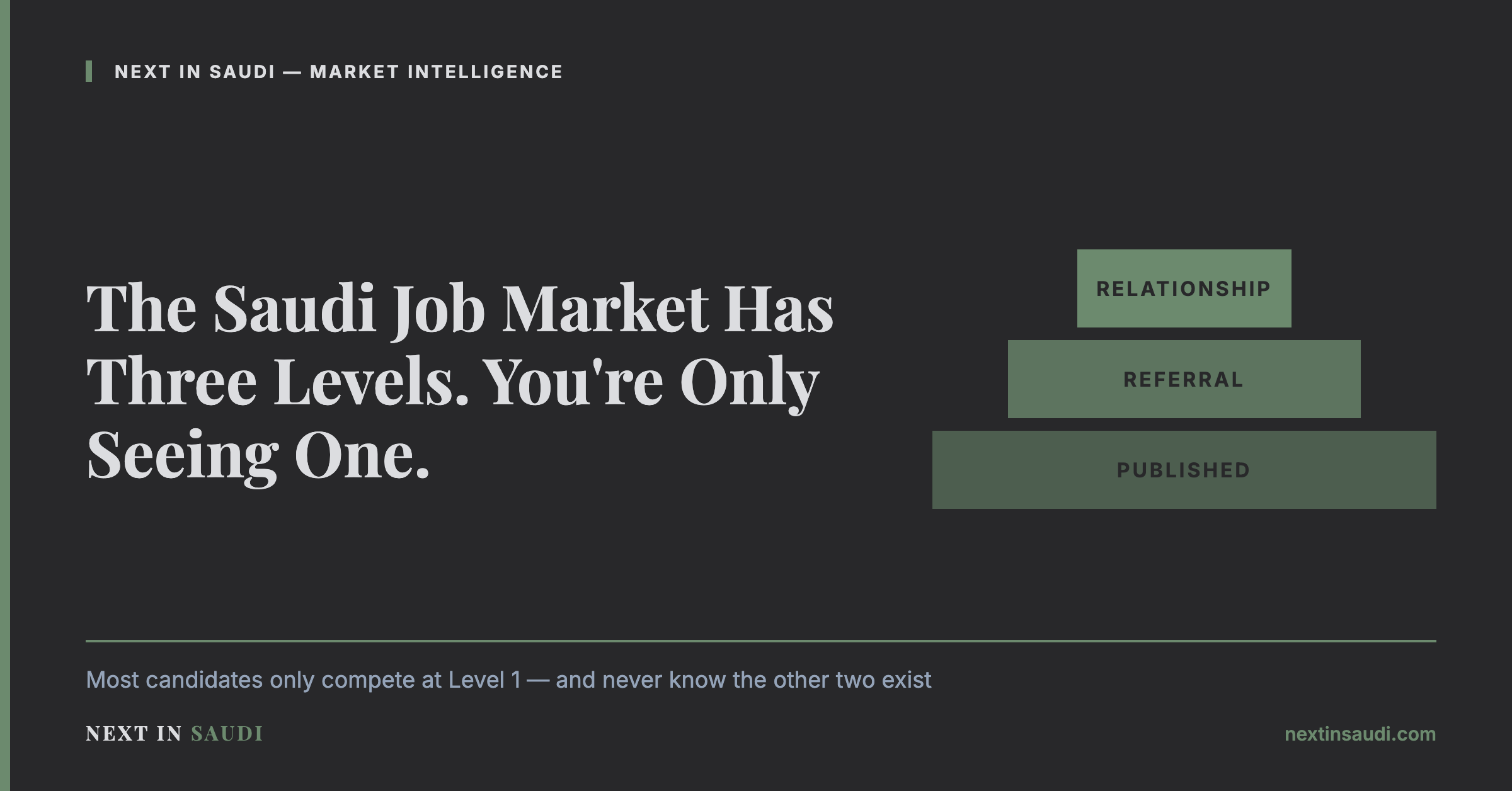
The Three Levels
Level 1 — The Published Market
This is what everyone sees. LinkedIn Jobs, Bayt, company career pages, GulfTalent. These postings are real. Companies genuinely want to fill them.
But this level represents the roles a company could not fill through its existing network, referrals, or relationships — the roles that reached the open market because internal options ran out first, not because they were always meant to be public.
This is the level nearly all outside candidates compete for. It is also the most crowded, because it is the only level most people know exists.
Level 2 — The Referral Market
Before a role reaches Level 1, most companies ask internally: does anyone know someone for this? Employees get asked directly. Recruiters reach out to their existing network before opening a public posting. Roles get filled here quietly, often before a job description is even finalized publicly.
This level is not secret. It simply does not advertise itself, because it does not need to. If you are not already connected to someone inside the company or the recruiter’s network, you never see these roles exist — you only see the ones that “leaked through” to Level 1 because the referral search came up empty.
Level 3 — The Relationship Market
This is the level almost nobody outside it believes exists until they experience it directly. Senior roles, in particular, get filled through direct relationships — a conversation at an event, a former colleague now at a giga-project, a recruiter who has placed someone at that company before and gets called first for the next opening.
These roles frequently never get written down as a formal job description before the hiring decision is substantially made. By the time a posting might appear — if one appears at all — the outcome is often already determined.
Why This Matters More Than Most Job Search Advice
If you are only operating at Level 1, you are competing against every other candidate who also only knows Level 1 exists — which, in Saudi Arabia’s market, is the vast majority of international applicants. That is why response rates feel so low. You are fighting for the most crowded, most visible, least favorable slice of the market.
The professionals who move faster are not more qualified. They are operating at a level with fewer competitors, because they understood the market had more than one layer.
How to Actually Move Up a Level
You do not skip straight to Level 3. Nobody does. You move up by building visibility and relationships that put you inside the referral conversation before the role reaches the public posting.
To access Level 2: Build genuine connections with people currently working at your target companies — not to ask for a job, but to understand the team, the challenges, and eventually, to be the person someone thinks of when a role opens internally.
To access Level 3: This takes longer and is built through consistent visibility over time — content, conversations, and a reputation that precedes you. Senior professionals who get pulled into Level 3 roles almost always spent months or years building recognizable expertise before the opportunity appeared.
3 Specific Actions This Week
1. Map who you already know at your target companies.
Check your first, second, and third-degree LinkedIn connections at five companies you are targeting. This is your existing access to Level 2.
2. Have one conversation this week that is not about a specific open role.
Reach out to someone at a target company to learn about the team or the market — not to ask if they’re hiring. This is how Level 2 relationships actually start.
3. Audit how visible you currently are in your specific field.
If a hiring manager searched your name or your specialty area, would anything meaningful come up? If not, that is the gap between you and Level 3.
The Line Worth Remembering
The Saudi job market is not smaller than it looks. It is bigger than it looks — most of it is just invisible from where most candidates are standing.
Want to go deeper?
The Next in Saudi community gives you weekly live calls, personal CV and LinkedIn reviews, and direct guidance on your specific situation.
Every Friday, Next in Saudi publishes one article like this.